Bubayang Font: A Romantic Script Handwritten Typeface for Elegant Branding
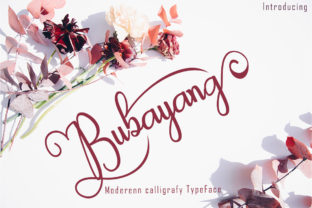
It was 10:47 a.m., coffee half gone, and I’d just opened a fresh brand board for a local ceramicist’s studio refresh—soft clay tones, linen textures, hand-thrown mugs, quiet confidence. Her voice was warm, intentional, unhurried. The logo needed to feel like a signature drawn with care—not rushed, not flashy, but unmistakably hers. That’s when I dropped Bubayang onto the artboard. Instantly, the mood shifted. Not because it’s “pretty,” but because it carries weightless elegance—the kind you get from ink gliding across handmade paper in a sunlit studio. Bubayang is a Script Handwritten font inspired by classic calligraphy, and yes, it’s romantic—but more importantly, it’s legible, rhythmic, and quietly confident.
Bubayang for Wedding Invitations and Elegant Branding
I tested Bubayang first on a wedding invitation suite mockup—cream stock, blind deboss, minimal layout. Its light feel meant no visual heaviness, even at 28pt. The letterforms breathe: generous x-height, open counters, subtle entry/exit strokes that echo dip-pen fluency without overcomplicating. Unlike many Script Handwritten fonts that collapse into illegibility below 24pt, Bubayang holds its grace down to 16pt on print—perfect for RSVP cards or envelope addressing. It doesn’t shout “wedding!”—it whispers intention. For boutique studios, artisanal skincare lines, or fine stationery brands, this isn’t decoration. It’s tonal alignment. You’re not choosing a font—you’re choosing a mood anchor.
Bubayang as a Logo Font for Small-Business Identity Systems
Logo work is where Bubayang shines—or stumbles, depending on context. I built three versions of the ceramicist’s monogram: one with Bubayang alone (her full name), one paired with a clean sans serif (for contrast), and one scaled tightly for a stamp. The solo version worked beautifully on her website header and business card—but failed on the shop sign (too delicate at distance). Lesson learned: Bubayang is best used as a display font or logo font for intimate-scale applications. Think packaging labels, Instagram bios, product tags, or hero section headlines—not billboards or app icons. It’s not built for utility; it’s built for resonance. And in that space? It delivers.
Bubayang in Packaging Design and Product Labeling
Next stop: mockups for her limited-edition glaze series. I placed Bubayang on matte kraft labels—“Oat,” “Slate,” “Mist”—in 14pt with tight tracking. It looked tactile, like something stamped by hand but refined enough for retail. No swashes needed; the base glyphs already carry gentle movement. That’s key: Bubayang is a Script Handwritten font with restraint. It avoids the frantic energy of some modern scripts, favoring calm rhythm over performative flair. For handmade shops, apothecaries, or slow-living brands, that restraint reads as authenticity—not trend-chasing. Just be mindful: avoid using it for ingredient lists or regulatory text. It’s a headline and accent font, never body copy.
Bubayang for Social Media Graphics and Web Design Headers
On screen, Bubayang behaves well—but only where contrast and size cooperate. I dropped it into a Shopify homepage banner (white text on soft sage image) at 48px. Crisp. Airy. Human. But at 18px in a blog post subtitle? Too fragile. Subtle kerning shifts and thin strokes don’t survive aggressive anti-aliasing on low-res displays. So yes—Bubayang works for social media graphics and web design headers, especially on platforms where users linger: Pinterest pins, Instagram carousels, email headers. Pair it with a warm serif (like Cormorant Garamond) or a grounded sans (like Poppins Light) for balance. Never pair it with another script—it’ll compete, not complement.
Bubayang Font Licensing and Practical Use Notes
Before sending anything to print or publishing a live site, I double-checked the license—and so should you. Bubayang is a commercial Fonts release, meaning it covers branding, packaging, web use (with proper @font-face setup), and digital products—but always verify scope: does it include app embedding? Merchandise resale? Print-on-demand templates? Read the EULA. Also, test file formats: most Script Handwritten fonts like Bubayang ship in OTF and WOFF2, but check for stylistic alternates or discretionary ligatures. This one includes light swashes—subtle, not showy—ideal for initials or closing flourishes. No bold weight (intentionally), no italics—just one thoughtful, cohesive cut. That’s its strength: focus. Not versatility. Not compromise.
If your project leans into warmth, intimacy, and time-honored craft—if “romantic” means sincerity, not cliché—Bubayang earns its place. It’s not a workhorse. It’s a whisper that lands. Try it on a single line of copy first: a tagline, a name, a moment of pause. See how it changes the air around the design. Then decide if that’s the feeling your brand needs to hold.